Imagine being 10 years old and having a target on your back. You’ve committed no crime. You are a child. But, at the end of World War II, many ethnic Germans throughout Europe were deemed “guilty by association”. This collective guilt was indiscriminately applied to innocent women and children. This included my mother and her family.
My mother was a Donauschwaben or Danube Swabian. She belonged to a group of people, ethnically German, who migrated from the Schwaben region of Germany and settled along the Donau or Danube River, into eastern Europe. Their migration out of Germany happened mainly between 1680 and 1780 to areas of Yugoslavia and Hungary. In my mother’s case, she lived in what is now known as Serbia. In her time, it was just Yugoslavia. And it was home, but not for long.
Toward the end of the war, a campaign to cleanse eastern Europe of Germans began. My mother’s family fled, leaving behind some of the men to continue fighting, like my grandfather, from whom I get my middle name. They traveled by horse and cart, taking as many of their belongings with them as they could. They headed toward Austria and Germany, which were safe havens for them at that time.
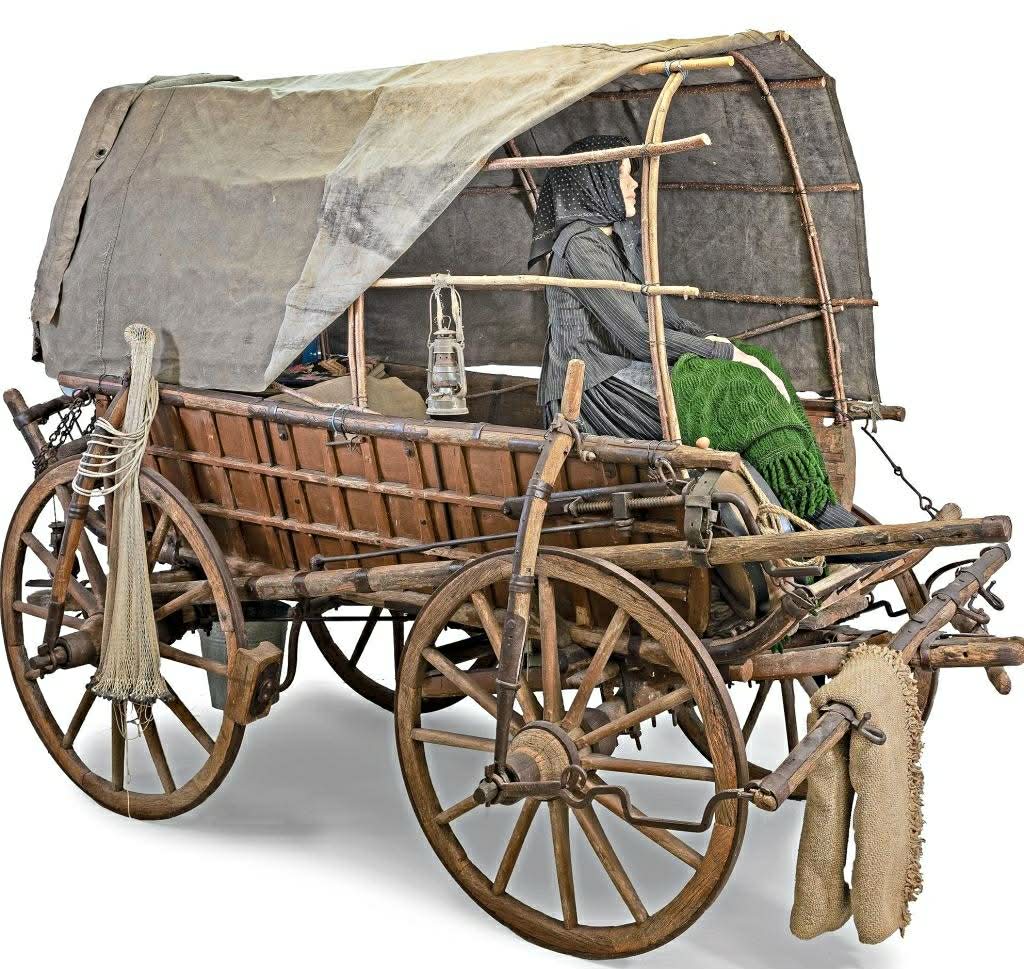
My mother’s family initially settled in Austria, but a year later, continued traveling to Germany, where they stayed for good. That was quite an ordeal for 10-year-old twin girls to go through. It would shape their personality and mindset for life.
Here are some of my mother’s stories about that time, that I can remember. I’m paraphrasing of course.
- My sister and I used to play with our cat by throwing it out of the window of our house. We always marveled that the cat never got hurt. The window seemed so high above the ground. Later, I saw pictures of my house and realized the house was small and the window was pretty low.
- At some point, our cat had kittens. We put them in a bag and drowned them in a bucket of water.
- During the war, when soldiers were heard nearby, my mother would sometimes hide my cousin in the oven. She was of a ripe age, so to speak. Any young woman like that could be taken and raped.
- At Christmas, we got an orange to eat and a new toy to play with, usually a ball or a doll. We were happy with that.
- We left our house behind. My sister and I sat in the back of the cart, looking at the world drifting away from us, the only world we knew, up until then. We held our dolls and cried.
- When we got tired of traveling, we looked for an empty house to sleep in. There were so many houses, just sitting empty. You could just go in… We slept in other people’s beds. It was eerie.
- Along the way, we sometimes heard shooting nearby. One time, it was so close, my mother took us and pressed us up against a tree to protect us. She would have and could have died for us. It was scary.
How my mother’s experience, as a child during war, shaped her as an adult can also be seen by her repetitive comments, especially, later in her life, when dementia came knocking. Often, while driving, my mother would see a little house on the side of the road, and say “You could live in there!” She was also always fascinated with trees. If she saw some thick forest, she would say “You could go in there, and no one can find you.” Another favorite of mine: “Look at the trees, how beautiful… but if they fall on you, you’re dead!” The forest was shelter, but could also be dangerous. Her origin story explains a lot. It really did help me connect with her on another level.
My desire to see where my mother came from started as a nice-to-have, kind of a cool thing to do. But, after learning more about the history and thinking about her stories, it really touched me deeply. The following is an account of my journey, from west to east and back, through five countries, 2,600 km of driving, to connect more viscerally with my mother’s roots.
Postojna, Slovenia
Sites: Predjama Castle, Park Postojnska Jama (caves), Vivarium (the Olm)
The trip started out as most do … with expectations. Slovenia was an unexpected gem. It’s more like western Europe than Eastern, and the food scene was surprisingly great!
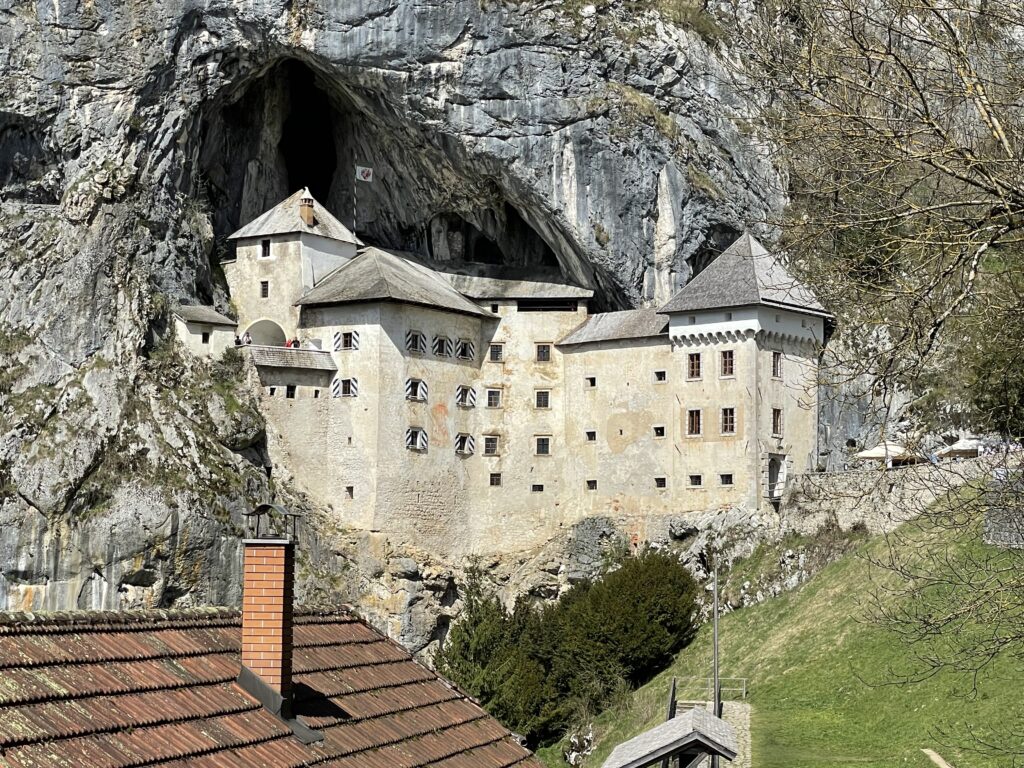
The Predjama Castle is a fortress built into a cliffside and is as magnificent as it sounds.
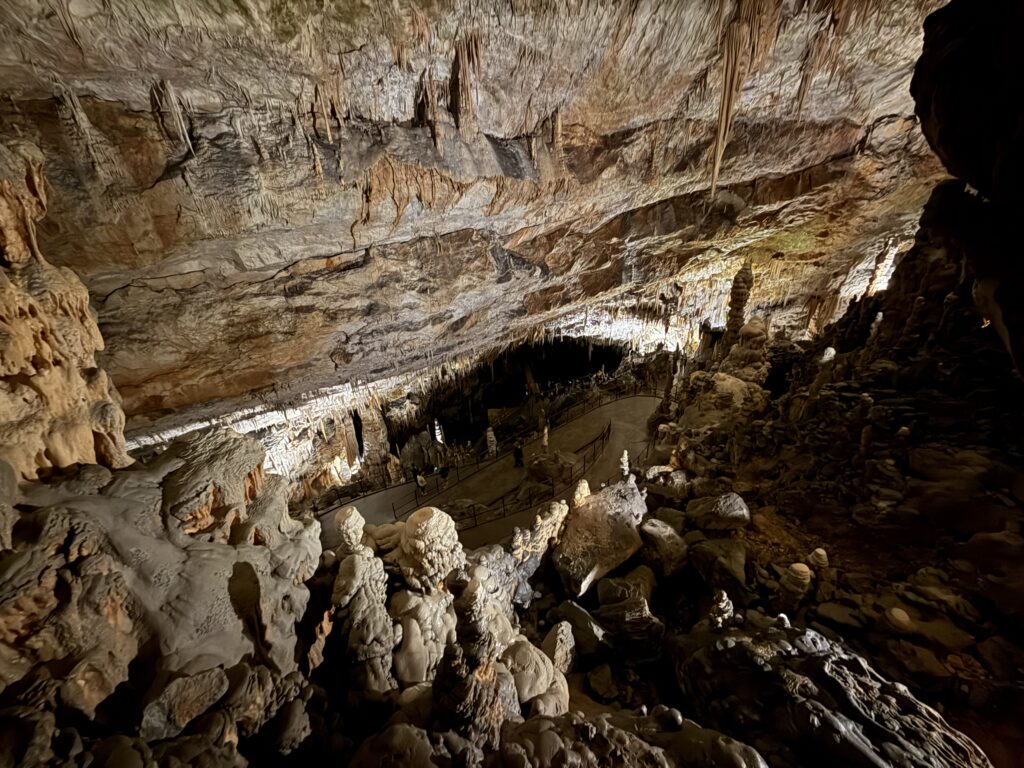
At Park Postojnska Jama, we took a cave tram through all the wonders that a limestone cave has to offer. It was cold, it was awesome, and generally, a fun ride.
Has anyone ever heard of a Vivarium? No? Me neither, so here’s a definition.
A vivarium is an enclosed space—like a tank, enclosure, or room—used to keep and observe living animals or plants in controlled conditions.
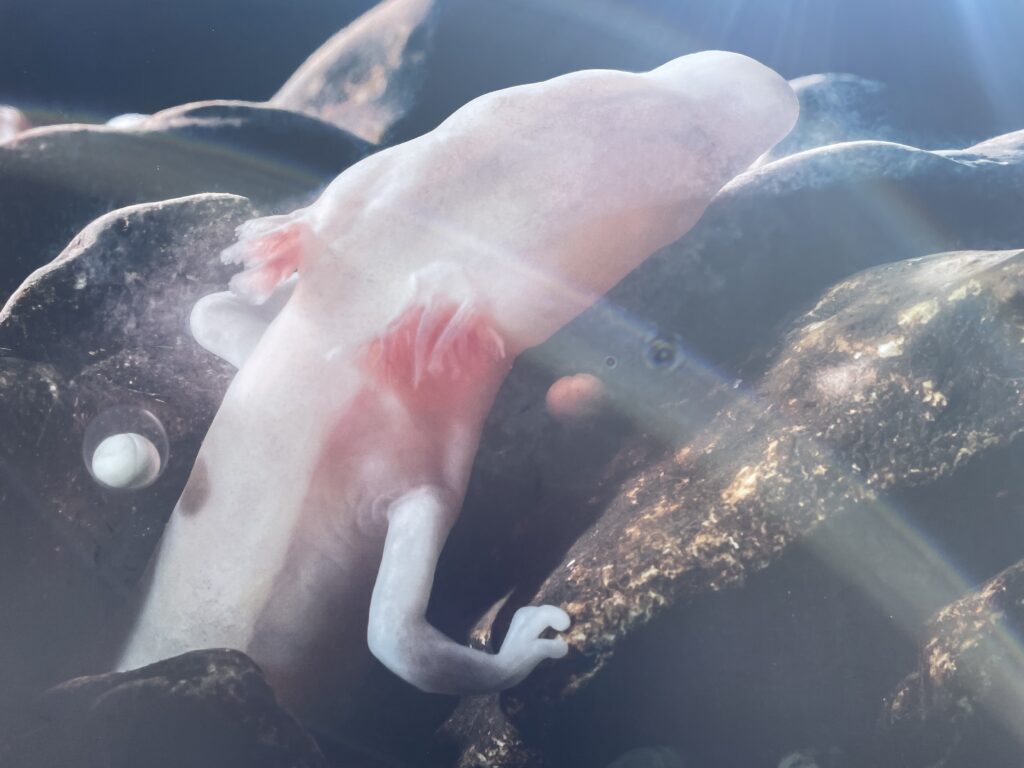
I’m sure you’ve seen cave-swelling albino creatures in books. Yes, well, thanks to the Vivarium, we could see the little guys up close and personal. The Olm is tiny and very lazy. He doesn’t move for decades. Were the ones we saw even alive? I’d like to think so.
Banja Luka, Bosnia Herzegovina
Sites: Kastel Fortress, Mariastern Monastery
While entering Bosnia Herzegovina, which required a border crossing, since it’s not part of the EU, things started to look different – worse roads, more crumbling homes and buildings. While driving, our focus was on not losing our car in a pothole, more than following the rules of the road. Banja Luka is Bosnia’s second largest city.
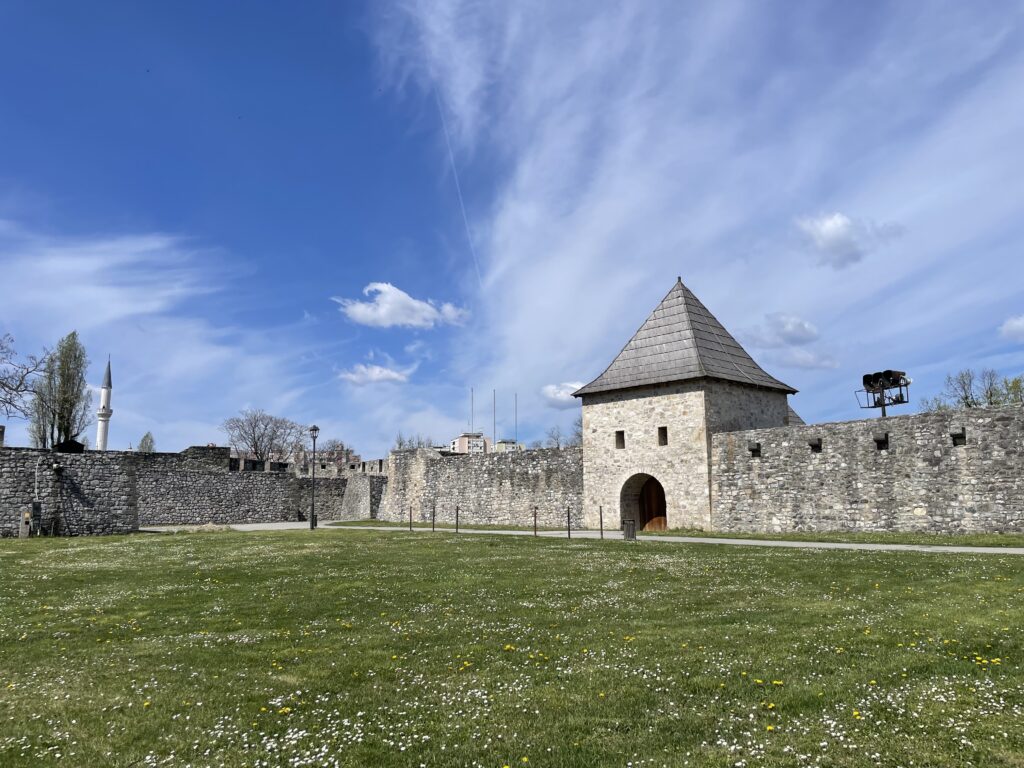
There was a lot to do here, but time being limited, we focused on the Ottoman Kastel Fortress, which is positioned on the banks of the Vrbas River. The site has been inhabited since the Paleolithic times, and the Romans even used it as a military base, and now, you can listen to open air concerts here. Nice!
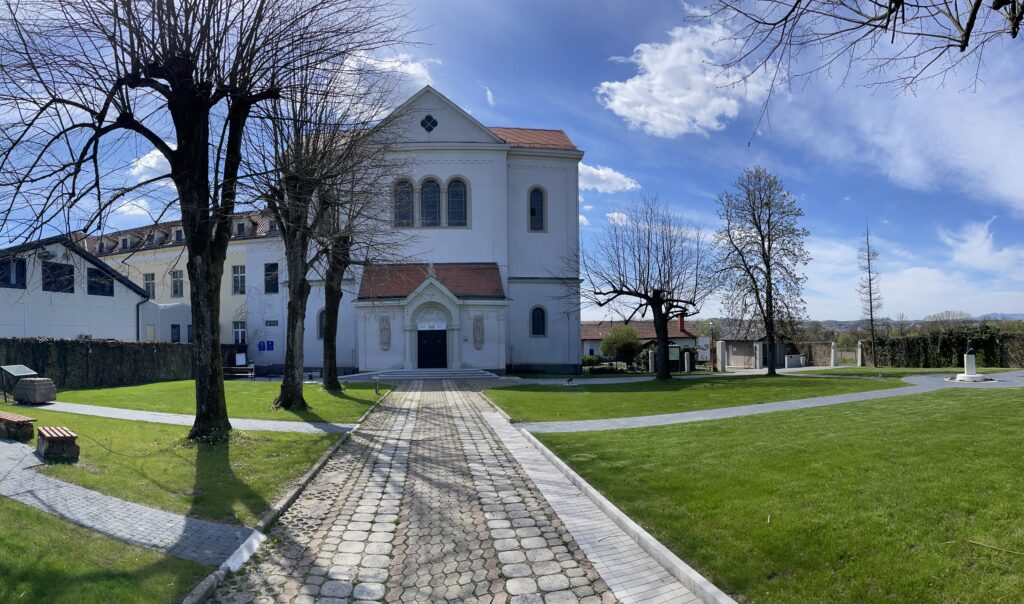
The Mariastern Monastery was founded in 1869 by Trappist Monks. Franz Pfanner was the founder, and his statue can be found here in the courtyard. It’s famous for cheese making, which still continues today.
Some practical notes on Bosnia Herzegovina
- Smoking is allowed indoors. If that bothers you, be warned.
- Keep your gas tank at full because in some areas, finding a station in time can be unreliable. We didn’t have this problem, but we didn’t stay long enough to find out, I guess.
- If you’re a woman, some men will not look at you when they talk to you. I discovered this is a Muslim custom, and Bosnia has a 51% Muslim majority, so expect it might happen.
- Do not walk into a field or off the beaten path because unexploded land mines from the civil war are still out there.
Novi Sad, Serbia
Sites: Batschka Trail of Tears Memorial Site, Futog Church, Futog Cemetery, Futog family house
Entering Serbia required another long wait through border control. Road conditions were about the same as in Bosnia. We stayed in Novi Sad, which is the second largest city in Serbia, with Belgrade being the capital and largest. Novi Sad won Capital of Culture in 2022, and it also hosts the famous EXIT music festival every year. My mother’s house is in the small town of Futog, near Novi Sad.
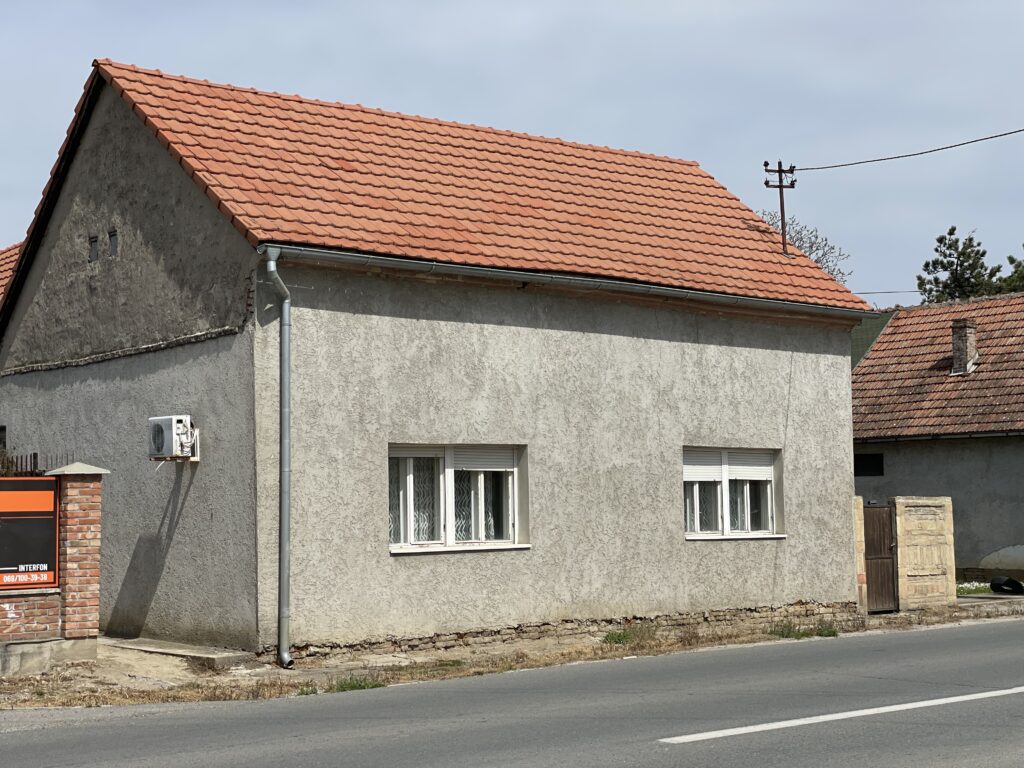
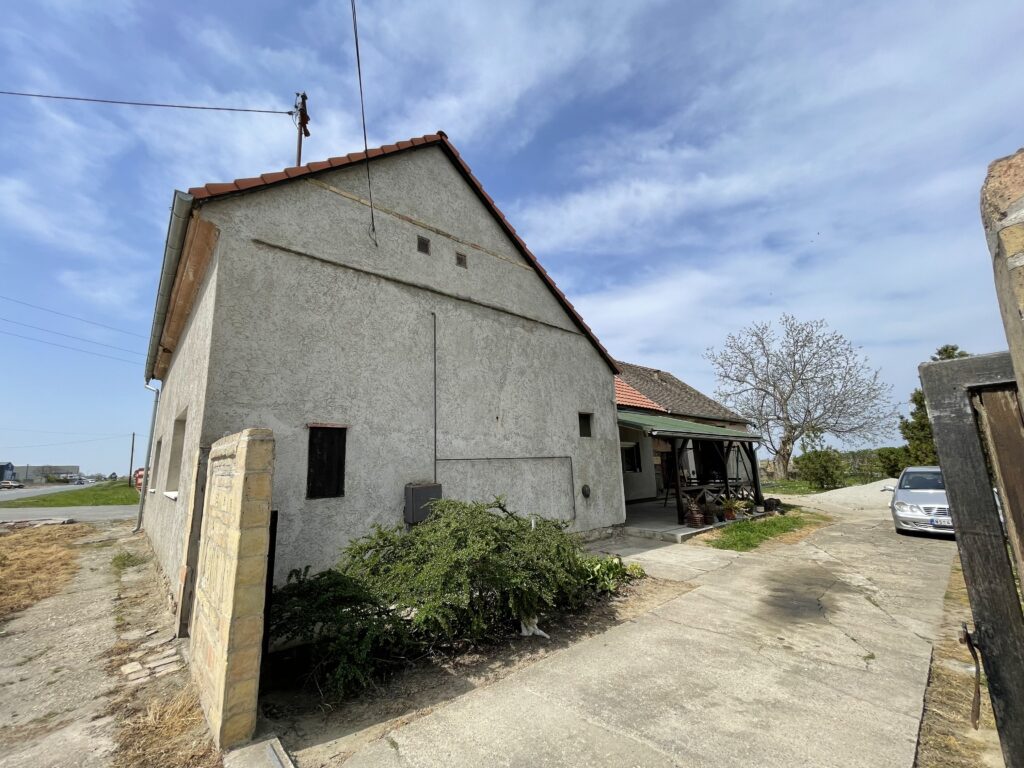
The photos below are of the same house taken by her sister in 1966, and it definitely looked better in present day than in the photos. I guess, people renovate. But you can see the main part of the house is exactly the same.
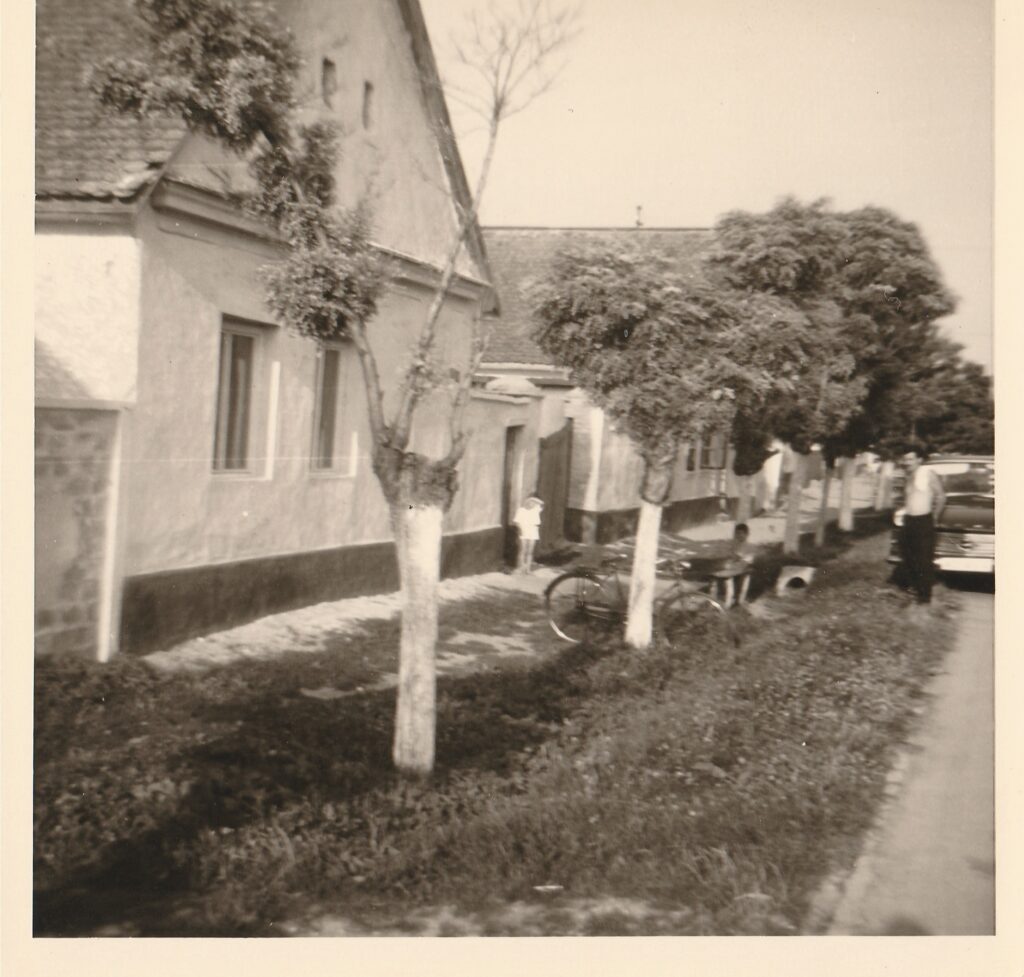
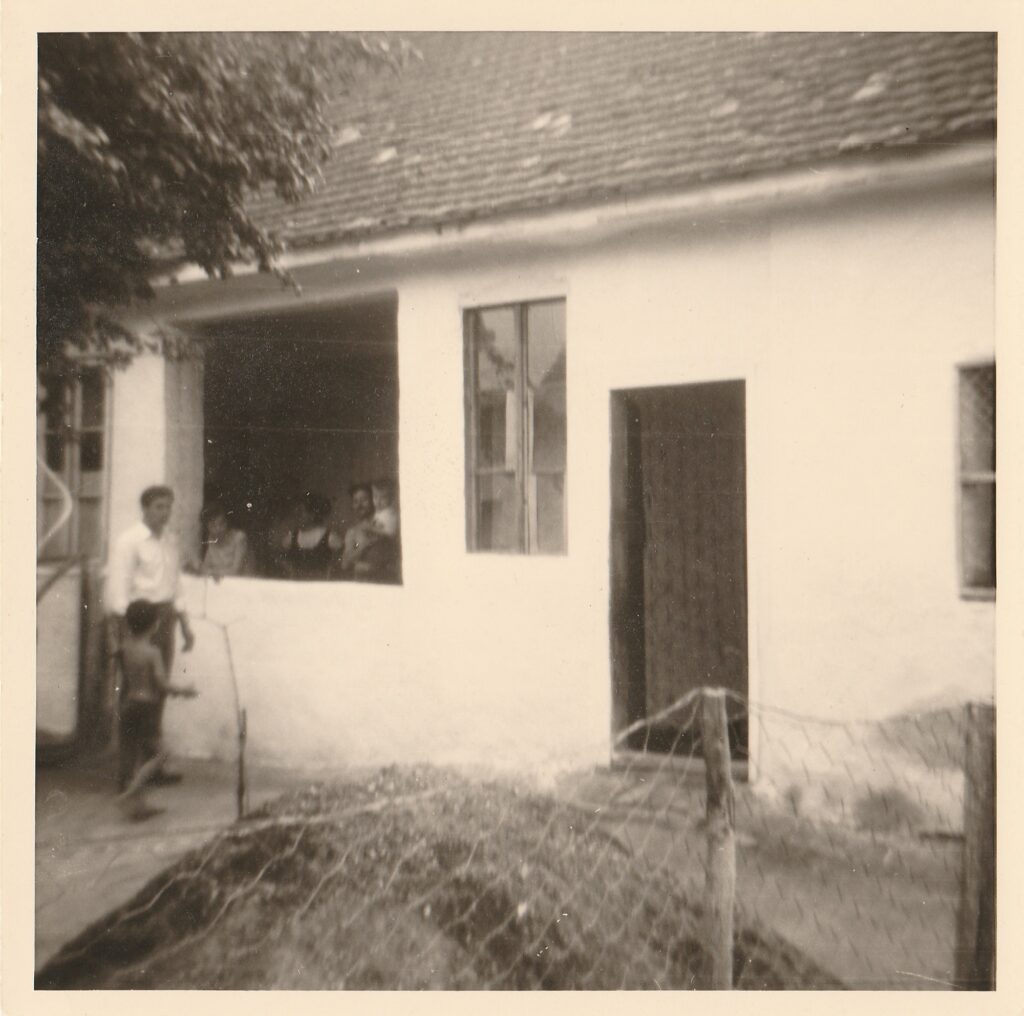
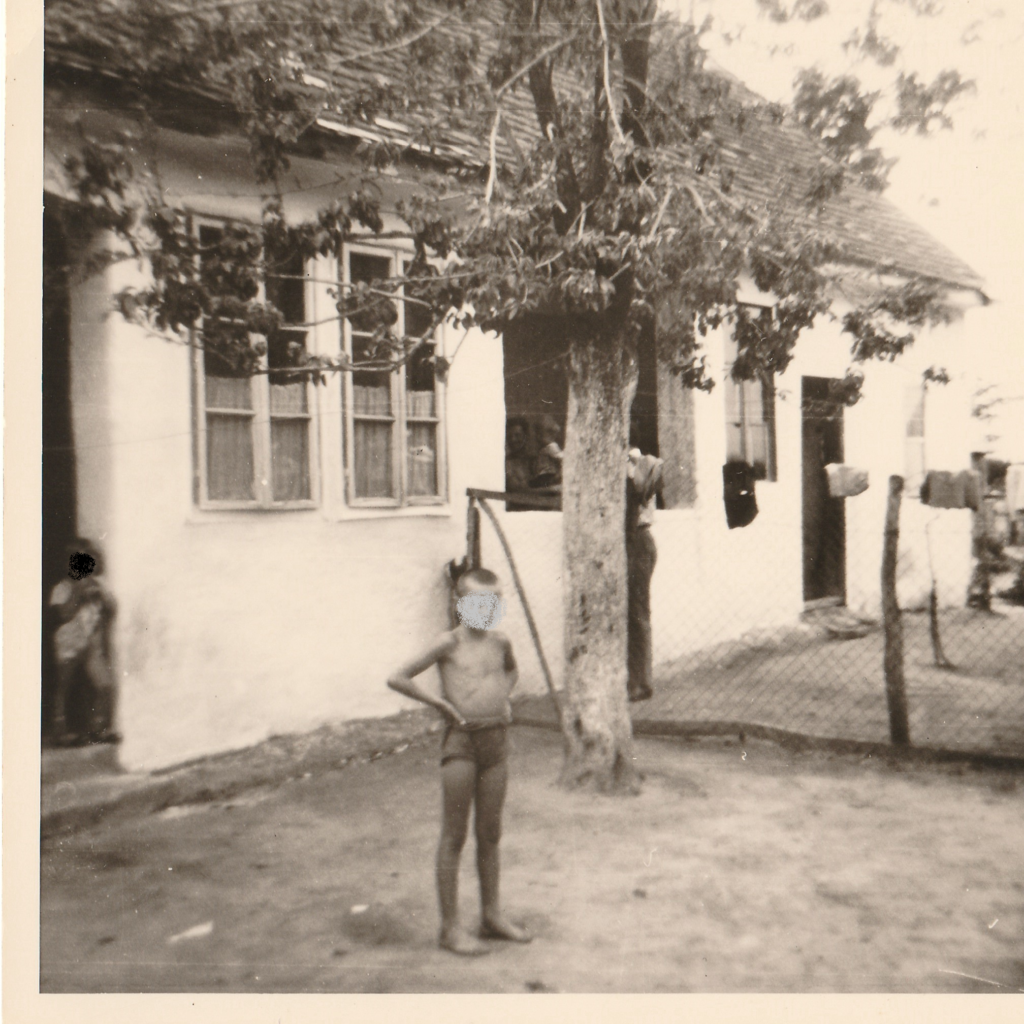
I filmed in front of the house on two different days. I’m not sure what people thought of me, but no one approached me. I wish they had, in a way. I would have liked to explore the grounds or be invited inside. But I kept a very respectful distance. My videos are not professional, so don’t judge, just enjoy, laugh if you must. 😊 You’ll find them at the end.
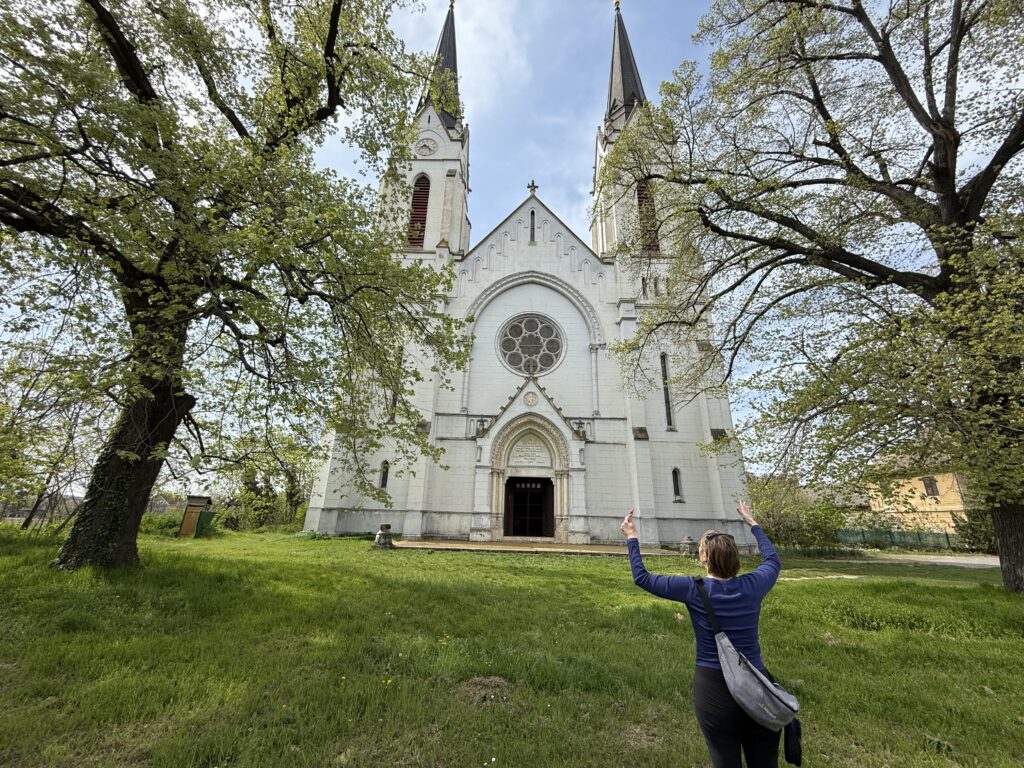
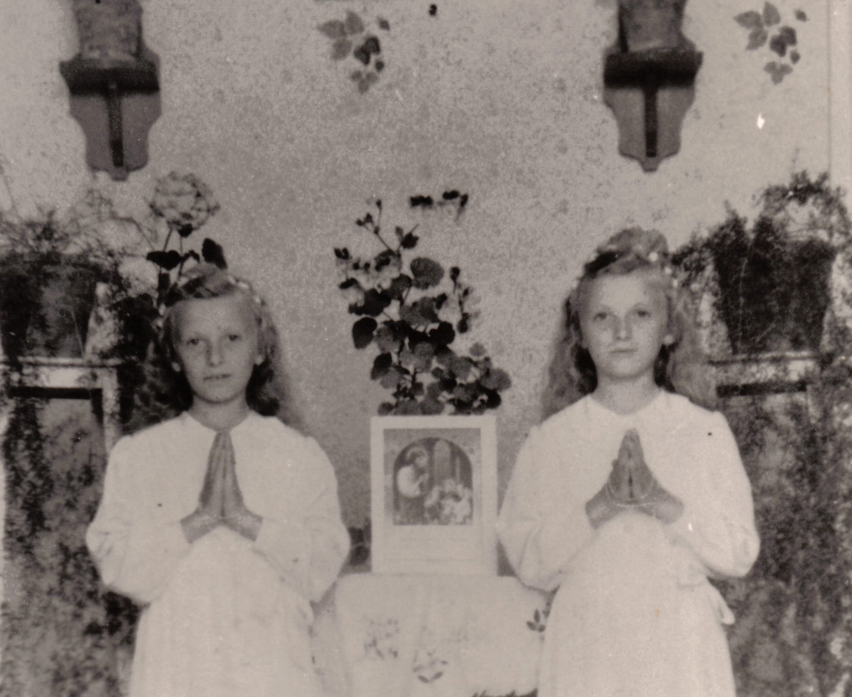
After seeing the house, we explored the church, where my mother must have had her Holy Communion before fleeing. I happen to have a photo.
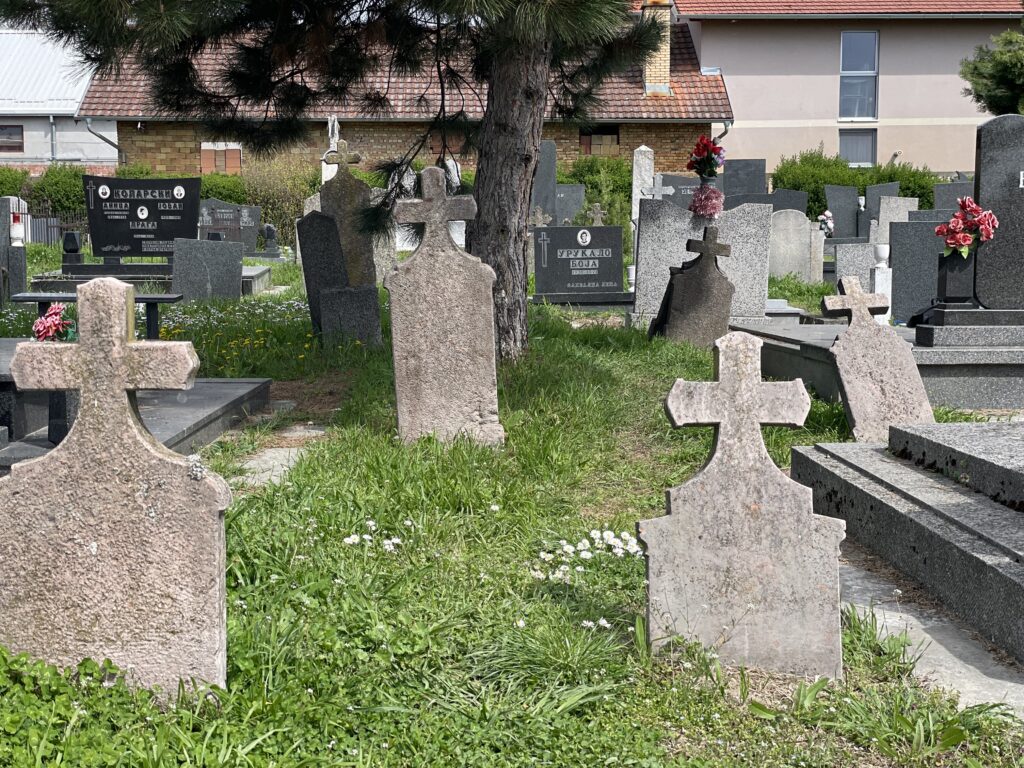
We went to the cemetery and spent some time looking at names, but the oldest stones, that were the right age, were unreadable.
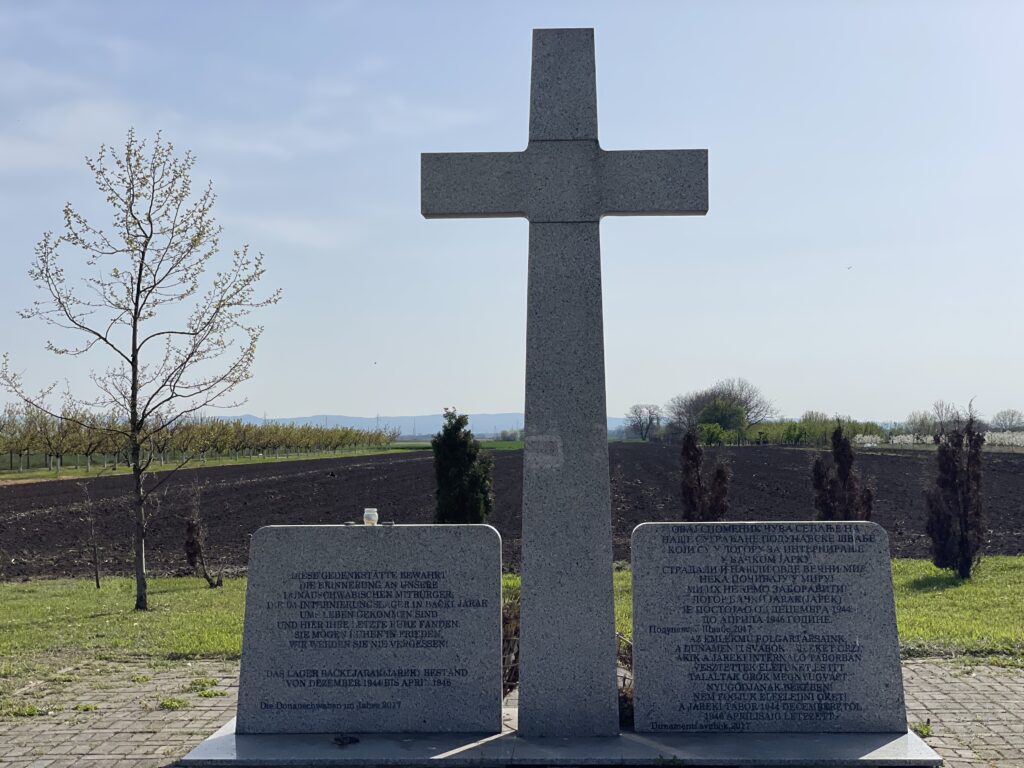
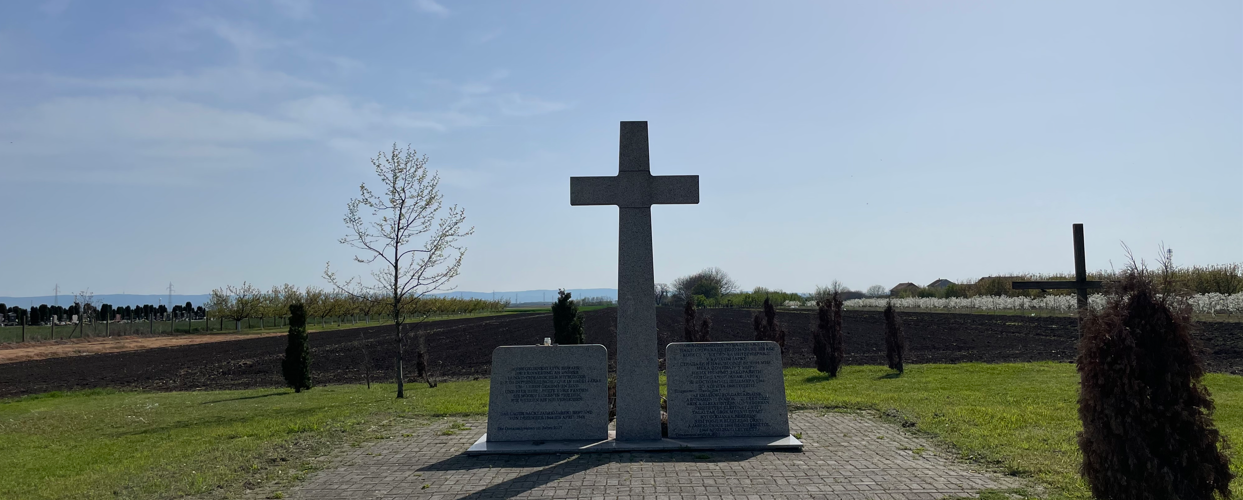
After this, we found the “Batschka Trail of Tears” Memorial Site at Bački Jarak, which was not easy to find. In German, it’s called the Denkmal der Donauschwaben. The “Batschka Trail of Tears” refers to the post–World War II forced expulsion, internment, and mass suffering of ethnic Germans (Danube Swabians) in the Bačka region of Yugoslavia, between 1944–1948, during which many were sent to labor camps or driven out under harsh conditions. Batschka in German or Bačka in Serbian is a region in Serbia, mainly in Vojvodina.
Here’s the address of the memorial if you want to find it: Гробљанска 30, Bački Jarak, Serbia
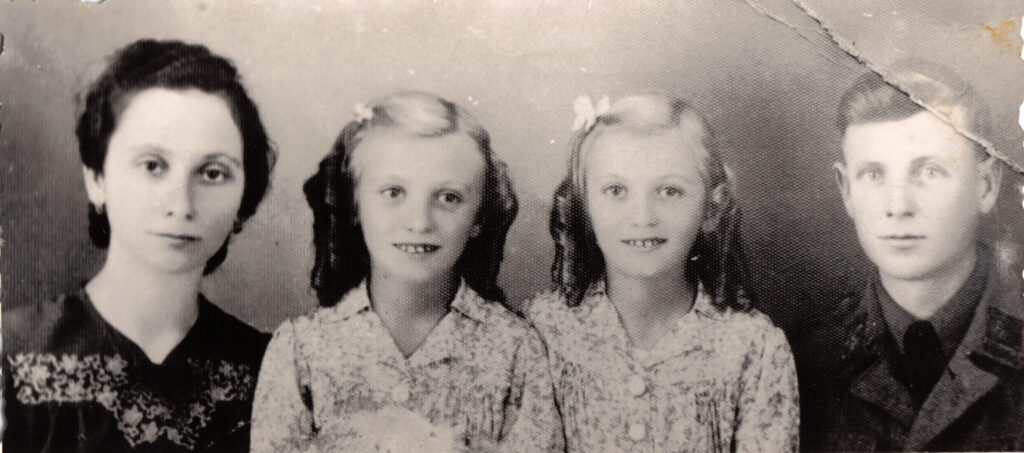
I’m proud I finally made it to where my mother’s life began. She meant a great deal to me and was the best mother she could be. I love her still and miss the oddly funny things she used to say.
Some practical tips in Serbia
- Food delivery is very popular here and the food was great. They use the Glovo app.
- The police are out in full force for any minor deviation from the traffic laws. Be careful!
Zagreb, Croatia
Site: The Stone Gate – Kamenita Vrata
We’re now on our way back home to Italy.
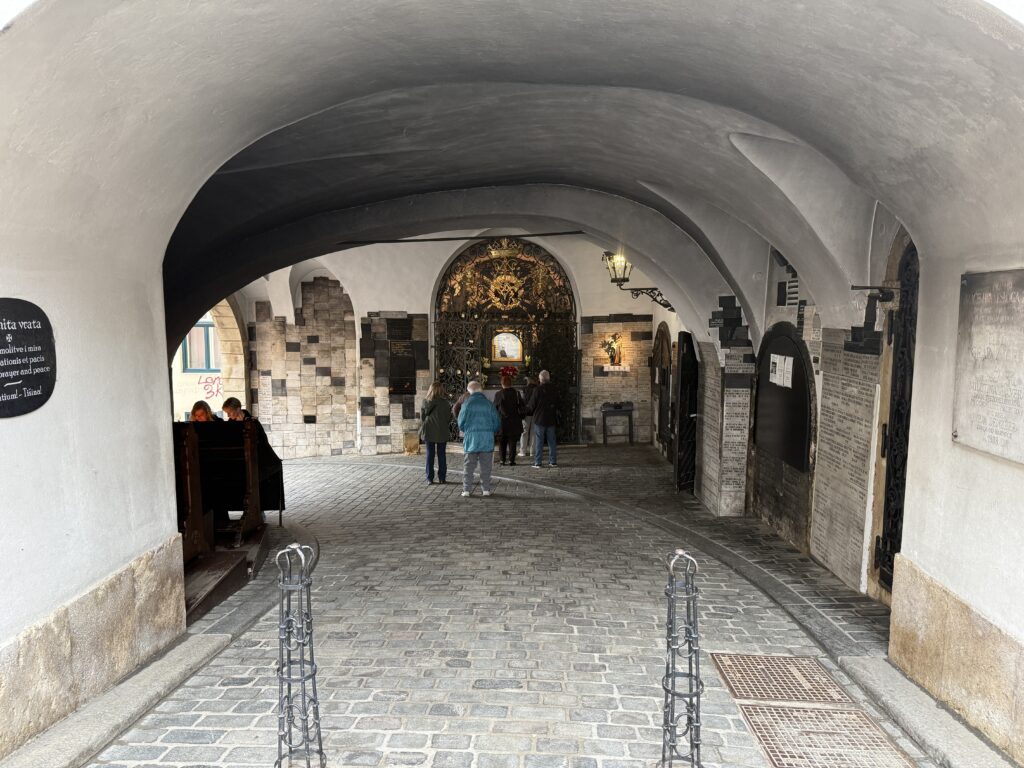
We only had a day here and chose to visit the only remaining medieval city gate in Zagreb, built in the 13th century. In 1731, after a fire destroyed much of the upper town, leaving only a picture of Mary in its wake, the gate became a sacred shrine to Mary. She was thought of as the protector of Zagreb, and in 1991, she was officially made the patron saint of the city.
Padua, Italy
Site: The Basilica of St. Anthony of Padua
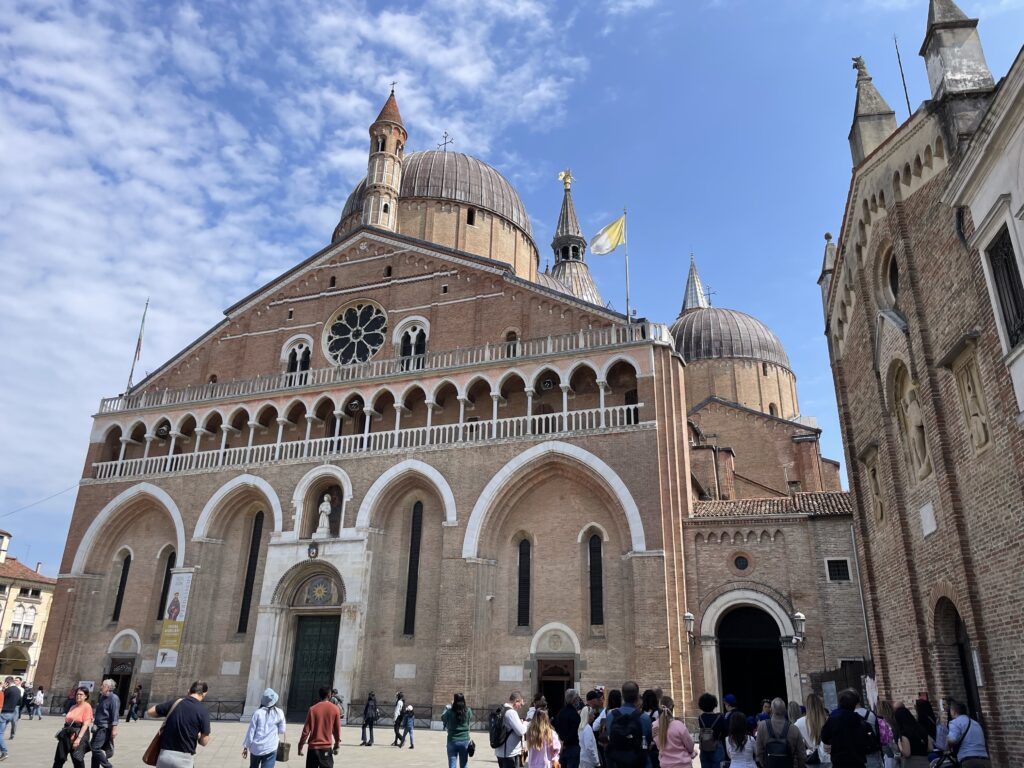
The city of Padua is inextricably linked to the figure of St. Anthony, a Franciscan friar of the thirteenth century, venerated all over the world and patron of the city itself. The Basilica of St. Anthony houses some relics linked to the saint, and it’s one of the most important pilgrimage sites in Europe.
After thanking the gods for a safe journey so far, all we had left to do was drive home.
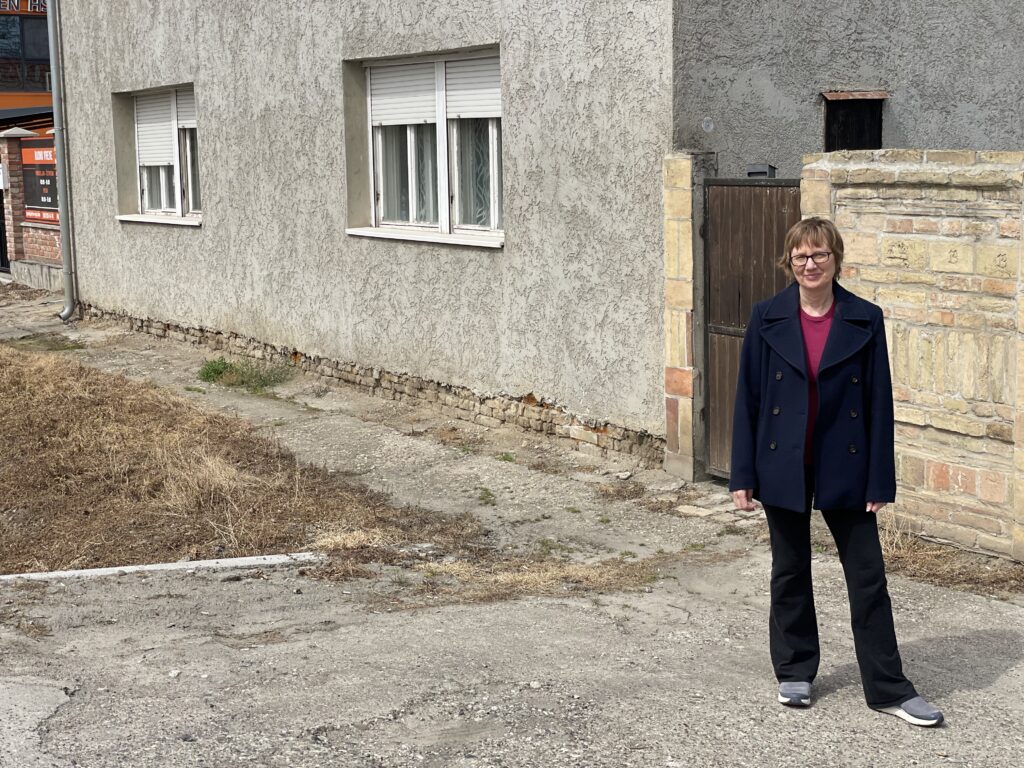
I leave you with this. The trip was physically and mentally taxing, but I’m glad I did it. Understanding your ancestry is deeply powerful. I recommend this undertaking to everyone, as it’s emotionally moving and definitely worthwhile.
Links
To learn more about the Donauschwaben: https://www.danube-swabians.org/
To learn about Capitals of Culture: https://culture.ec.europa.eu
Information on the EXIT Festival: https://www.exitfest.org/en
More about Batschka: https://www.dvhh.org/batschka/
What an amazing journey. How wonderful that you were able to see the house your mother lived in.
Hope you and Russ are well. Much love, Vicky and Braden
Hallo Anita, das ist ein sehr schöner Bericht. Ich war 1966 dort mit meinem Vater und Mutter. Jetzt sieht es schon wieder ganz anders aus. Ich denke die haben das Haus zwischenzeitlich renoviert.VG Willi